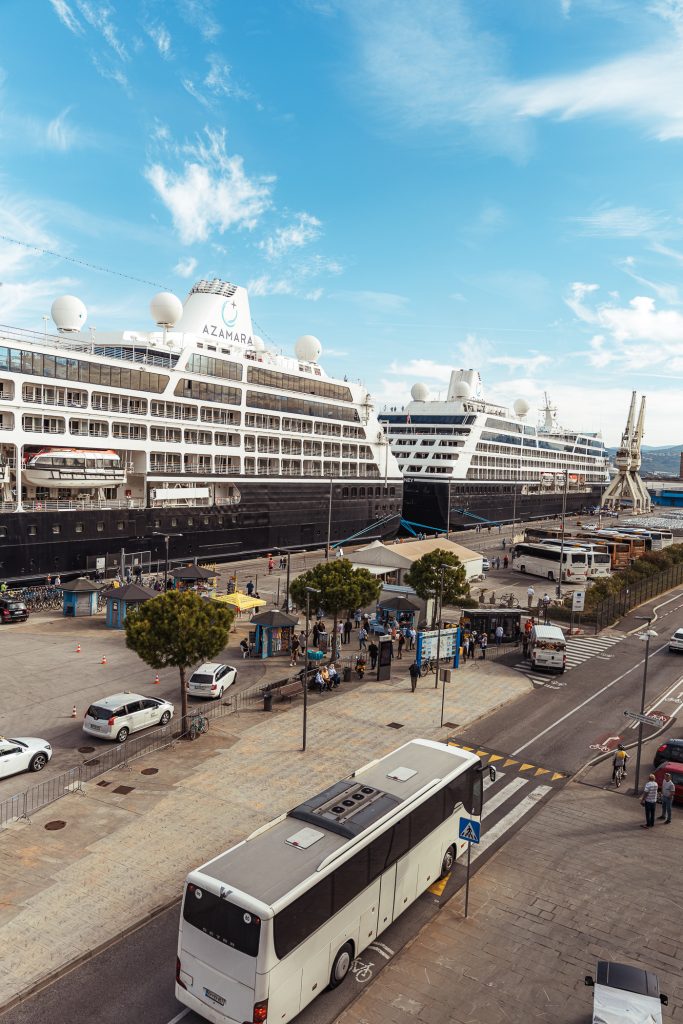
On the day of a cruise call, everything feels urgent. The ship is in port. The clock is running. Guests are watching.
When problems appear, they appear quickly.
Delays, congestion, overcrowded attractions, stressed guides, and guests who spend more time checking the time than enjoying the destination are familiar challenges in shore excursion operations. When they happen, attention naturally turns to execution: what went wrong on the ground, who reacted too slowly, which supplier failed to deliver.
But in most cases, the day of the call is not where these problems begin.

For experienced cruise and destination professionals, it becomes clear over time that many shore excursion issues are not operational surprises. They are the predictable result of earlier planning decisions, or, just as often, of critical design questions that were never fully addressed.
This article looks at shore excursions not as individual products, but as operational systems. It explores how design choices made long before a ship arrives in port shape outcomes on the ground, and why reliability in shore excursions depends less on last-minute problem-solving and more on disciplined planning, realistic assumptions, and system thinking.
This perspective is central to how Atlas Express approaches shore excursion development and delivery.
Execution Is Often Where Problems Appear — Not Where They Begin
When a shore excursion struggles, execution is the most visible point of failure.
A guide falls behind schedule.
A vehicle arrives late.
Traffic disrupts a carefully planned route.
An attraction cannot absorb the expected number of guests.
These are real issues, and they matter. But they are rarely isolated incidents.
In many cases, execution issues are symptoms of earlier decisions:
- A schedule that left no margin for delays
- A route designed without accounting for seasonal congestion
- A supplier selected for quality, but not evaluated for cruise-scale operations
- An experience designed for small groups, applied to large volumes
By the time execution is under pressure, the system is already operating close to its limits.
This is why focusing exclusively on performance on the day of the call often leads to repeated problems. Without addressing the underlying design logic, the same patterns reappear across seasons and itineraries.
Effective shore excursion management starts by recognizing that execution quality is constrained by design quality.
Shore Excursions Function as Systems, Not Standalone Experiences
A common planning pitfall is treating shore excursions as individual experiences rather than interconnected systems.
When excursions are evaluated only on content — what guests will see, where they will go, what makes the experience attractive — operational performance is often addressed too late.
In reality, every shore excursion operates within a tightly defined system:
- Fixed arrival and departure times determined by the vessel
- Shared public infrastructure used simultaneously by multiple tours
- Parallel group movements starting and ending at the same point
- Limited tolerance for delays, with minimal recovery options
Within this environment, small disruptions rarely stay small.
A short delay at one attraction affects transfer timing. A late departure compresses the return window. A minor route issue cascades across multiple tours.
Designing shore excursions as systems means evaluating how all components interact under realistic conditions, not just how appealing the itinerary appears in isolation.
This approach shifts planning from “Is this a good experience?” to “Can this experience perform reliably, repeatedly, and under pressure?”
The Risk of Overdesign in Shore Excursion Planning
Overdesign is one of the most common and least discussed challenges in shore excursion development.
It often stems from good intentions: the desire to showcase as much of a destination as possible within a limited timeframe. However, more content does not always result in a better experience.
Typical signs of overdesign include:
- Too many stops in a single excursion
- Tight transitions between locations
- Minimal buffer time between activities
- High dependence on perfect traffic and timing conditions
On paper, these programs appear comprehensive. In practice, they leave little room for variation.
Professional shore excursion design prioritizes consistency over ambition. The goal is not to include everything that could be done, but to select what can be delivered reliably across different ships, guest profiles, and seasonal conditions.
Restraint in design is not a limitation. It is a practical decision that improves outcomes for guests, guides, and cruise partners alike.
Supplier Capability Must Match Cruise Operational Reality
Local suppliers play a critical role in shore excursion success. However, capability should never be assumed based solely on reputation or experience in non-cruise tourism.
Cruise operations introduce specific requirements that differ significantly from independent travel or small group tours, including:
- Strict adherence to fixed timelines
- Management of large groups arriving simultaneously
- Coordination across multiple parallel tours
- Clear escalation procedures when issues arise
A supplier may excel in delivering high-quality services but still struggle in a cruise environment without appropriate preparation and support.
High-performing shore excursion programs invest in aligning suppliers with cruise-specific expectations. This includes clear operational guidelines, realistic scheduling, communication protocols, and on-site coordination.
Reducing variability across suppliers is one of the most effective ways to increase reliability at scale.
Designing for Peak Conditions, Not Average Ones
Many shore excursions are planned around average conditions: typical traffic levels, standard site capacity, and ideal weather assumptions.
Cruise operations rarely take place under average conditions.
Peak season introduces additional pressure at every stage:
- Roads are more congested
- Attractions reach capacity faster
- Service recovery options are limited
- Small delays accumulate quickly
Designing for peak conditions is not overly cautious. It reflects the reality of cruise deployment.
Programs that function well during peak season tend to perform smoothly during shoulder and off-peak periods. The opposite is rarely true.
By planning for the most demanding operating environment, excursion designers reduce risk and improve consistency across the entire season.
On-Site Coordination as Part of System Design
On-site presence is sometimes viewed primarily as a cost consideration. In practice, it is a strategic design choice.
Local coordinators play a critical role in managing real-time complexity:
- Identifying pressure points before they escalate
- Adjusting group flows based on actual conditions
- Supporting guides and drivers during high-pressure moments
- Protecting the wider operation from single-point disruptions
No amount of advance planning can fully account for every variable on the ground. On-site coordination provides the flexibility needed to adapt without compromising the overall system.
From a design perspective, on-site presence is not an add-on. It is an integral component of a resilient shore excursion operation.
Measuring Success Through Failure Prevention
The most successful shore excursion days often attract little attention.
Tours depart and return on time. Guests remain relaxed. Issues are resolved quietly, if they arise at all.
This outcome is sometimes mistaken for simplicity or luck. In reality, it reflects effective failure prevention.
Preventing problems from materializing requires:
- Realistic assumptions during planning
- Conservative timing where necessary
- Clear roles and responsibilities
- Strong communication between all parties
When these elements are in place, many potential issues never surface.
Operational maturity in shore excursions is measured not by how dramatically problems are resolved, but by how rarely guests are aware that intervention was needed.
Designing Shore Excursions for How They Actually Operate
Reliable shore excursion programs are built on practical realities, not ideal scenarios.
They are shaped by:
- Honest assessments of time and capacity
- Clear understanding of infrastructure limits
- Disciplined program design choices
- Well-prepared and aligned partners
- Systems that absorb pressure without breaking
When shore excursions perform well, guests rarely comment on logistics. They remember how the experience felt: smooth, balanced, and unhurried.
That outcome is the result of decisions made long before the ship arrives in port.
At Atlas Express, shore excursion design begins with this understanding — that success on the day of the call is determined by planning discipline, system thinking, and realistic design choices made well in advance.
Why This Approach Matters
- Reduces operational risk during peak periods
- Improves guest satisfaction through consistency
- Supports guides and suppliers with clearer expectations
- Protects cruise schedules and brand reputation
- Creates scalable, repeatable excursion programs
Well-designed shore excursions rarely draw attention to themselves.
They simply work.
And when they do, guests are free to focus on the destination, not the timetable. As it should be.
What causes most shore excursion problems?
Most issues originate in early planning and design decisions rather than execution on the day of the call.
Why is peak season planning important for shore excursions?
Peak conditions amplify delays and capacity limits. Designing for peak ensures reliability throughout the season.
How do suppliers affect shore excursion reliability?
Suppliers must be prepared for cruise-specific requirements such as fixed timelines, large groups, and coordinated operations.
Why is on-site coordination necessary?
On-site teams provide real-time oversight, prevent small issues from escalating, and support system resilience.